

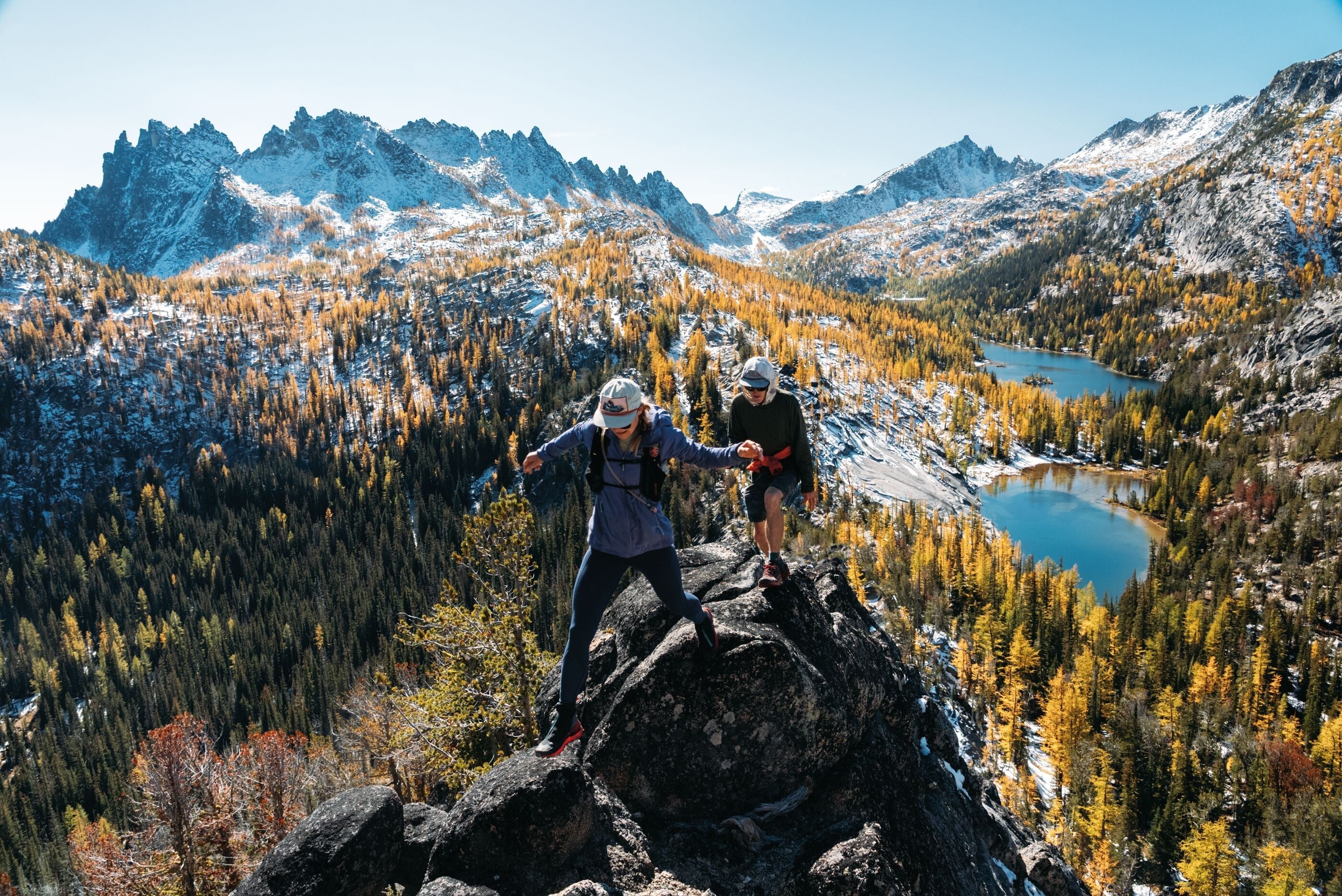
Standing outside in Calgary or Banff on a September morning, it's easy to reach for the heaviest jacket in the closet — and regret it by 1pm. This is the trickiest stretch of the year to dress for: frost on the windshield at 7am, shirt-sleeve weather by noon, and a cold wind off the water if you're in Victoria or Tsawwassen. The fix isn't one perfect jacket. It's a layering system you can add to and strip away as the day moves.
Here's how we build one, piece by piece.
The three layers, and what each one is actually doing
A good layering system has three jobs split across three pieces:
- Base layer — moves sweat off your skin so you don't get cold and clammy once you stop moving.
- Midlayer — traps warm air close to your body. This is your insulation.
- Shell — blocks wind and rain so the first two layers can actually do their job.
The mistake most people make is buying one heavy piece to do all three jobs at once. It works until the temperature swings 15 degrees in an afternoon — which, in the Rockies or on the coast, it will.
Base layer: start with what touches your skin
Look for a merino or synthetic base layer — cotton is the one fabric to avoid here, since it holds onto moisture instead of moving it. Patagonia's Capilene line is built exactly for this: lightweight, quick-drying tops and bottoms that work equally well under a shell on a cold hike or on their own on a warmer one.
Shop: Patagonia Capilene Cool
Midlayer: this is where fall gear earns its keep
September is prime midlayer season — most days you'll wear this layer alone, and only add a shell when the wind picks up. Patagonia's fleece lineup (think Better Sweater-style pile fleece and R1-style grid fleece) covers both ends of the spectrum: the pile fleece is warmer and more wind-resistant on its own, the grid fleece breathes better if you're moving fast on a trail.
If you want a heavier, more rugged midlayer for cooler mountain mornings, KÜHL's fleece and flannel pieces lean into that heritage, built-for-work-and-weather look that pairs naturally with the rest of an Elements outfit.
Shop: Patagonia Men's Fleece · Patagonia Women's Fleece
Shell: your insurance policy
The shell is the layer you might not wear all day, but you'll be glad you packed. A packable wind shell handles most September days in Alberta and BC; step up to a rain shell for the coast or for anyone heading up into alpine terrain where weather turns fast. Patagonia covers both ends of that range — Houdini-style wind shells that fold into their own pocket for a daypack, and Torrentshell-style rain shells for when the forecast actually turns.
Shop: Patagonia Men's Jackets & Vests · Patagonia Women's Jackets & Vests
Putting it together for what you're actually doing
- Trail hiking around Banff, Kananaskis, or the Sea-to-Sky: Capilene base, grid fleece midlayer, packable wind shell in the pack even if the forecast looks clear.
- In-town errands and school pickup: Better Sweater-style fleece over a base layer is often enough on its own.
- Coastal mornings in Victoria or Tsawwassen: swap the wind shell for a rain shell — the drizzle shows up before the temperature drop does.
- Early hunting or fishing trips: Filson midlayer earns its place over a technical fleece — built for brush and weather, not just trail.
FAQ
How many layers do I actually need for a September hike in the Rockies? Three is the sweet spot: a moisture-wicking base, a fleece midlayer, and a packable shell in your bag even on a clear-looking day. Mountain weather changes faster than the forecast does.
Can I just wear my summer gear a little longer? For warm afternoons, sure — but cotton tees and shorts won't keep you warm once the sun drops or the wind picks up. Swapping in a proper base layer costs you nothing on a warm day and saves you on a cold one.
What's the difference between a wind shell and a rain shell? A wind shell blocks air movement and light drizzle — it's light, packable, and enough for most inland fall days. A rain shell is fully waterproof, heavier, and worth the extra weight if you're near the coast or heading into exposed alpine terrain.
Ready to build your layering system?
Come see us in-store in Calgary, Banff, Victoria, Willow Park, Edmonton, Tsawwassen, or Calgary DT and our staff will fit you piece by piece
Share:
Patagonia PowSlayer Freeride Kit Review
Built for the Long Haul: Filson's Fall Workwear Essentials